National Textile University Innovate & Lead
Home I Webmail I Library I Academic Calendar I Testing Services I Contact List I Jobs I Site Map
 Information About

Information For


  Courses List and Description
Courses List

Yarn Manufacturing

YM-251 Introduction to Yarn Engineering (3 3 4):

YM-351 Pre-Spinning Processes (2 3 3):

YM-352 Yarn  Production Engineering (3 3 4):

YM-454 Spinning Calculations (3 3 4):

YM-452 Advance Spinning Techniques (3 3 4):

YM-453 Specialty Yarns (3 3 4):

YM-454 Senior Design Project - I   (1 6 3):

YM-455 Senior Design Project - II   (1 6 3):

TM-151 Textile Raw Materials (4 0 4):

TM-251 Fibre Science (2 3 3):

TM-252 High-Performance Fibres (3 0 3):

TM-351 Non-Wovens & Technical Textiles (3 0 3) :

TM-352 Mechanics of Fibrous Structures  (2 3 3):

Fabric Manufacturing

FM-221 Introduction to Weaving & Knitting (3, 3)4 :

FM-321 Weaving Preparatory Process (2, 3)3:

FM-322 Weaving Mechanism (3, 3)4:

FM-421 Advance Weaving & Knitting Techniques (3, 3)4:

FM-422 Fabric Structure & Design (3, 3)4 :

FM-423 Weaving & Knitting Calculations (4, 0)4:

Textile Chemistry

TC-231 Textile Chemical Processing (3 3 4):

TC-331 Pre-treatment of Textiles (2 3 3):

TC-332 Textile Dyeing (3 3 4):

TC-431 Colour Science (2 3 3):

TC-432 Textile Printing (3 3 4):

TC-433 Textile Finishing (3 3 4):

Polymer Science & Engineering

PES-151 introduction to polymer science and engineering (3 0 3)

PSE-251 Structure and properties of polymer (3 0 3)

PSE-252 Textile polymers (3 0 3)

PSE-351 Polymer engineering (3 0 3)

PSE-352 Introduction to fundamentals and practice of rheology (3 0 3)

PSE-353 Polymer characterization (3 3 4)

PSE-451 Polymer processing (3 0 3)

PSE-452 Polymer chemistry and industry (3 0 3)

PSE-453 Fibre reinforced materials (3 0 3)

PSE-455 Testing of Polymer Products (3 3 4)

PSE-456 Polymer from renewable resources (3 0 3)

TC-333 Fundamentals of coloration & finishing (3 3 4)

TM-235 Engineered fibrous structure (3 0 3)

PSE-454 Special topics in polymer science & engineering (2 0 2)

Garment Manufacturing

GM-241Garment Manufacturing

GM-341 Anthropometry and Garment Construction (2 6 4)

GM-342 Sewn Product Engineering (3 3 4)

GM-441 Garment Testing and Quality Management (3 3 4)

GM-442 Apparel Machinery (3 3 4)

GM-443 Apparel Merchandising and Sourcing (3 0)

Becholer of Textile & Design

(TE-141) Textile Basics & Materials (3 0 3):

(DES-142) History of Art & Design (3 0 3):

(DES-141) Design Fundamentals (2 3 3):

(DES-143) History of Fashion and Textile (3 0 3):

(DES-145) Drawing-I  (2 3 3):

(DES-144) Introduction to Textile Designing (2 3 3):

(TE-142) Fabric and Apparel Structures (3 0 3):

(DES-241) Drawing II (2 6 4):

Bachelor of Textile & Design

(TE-141) Textile Basics & Materials (3 0 3):

(DES-142) History of Art & Design (3 0 3):

(DES-141) Design Fundamentals (2 3 3):

(DES-143) History of Fashion and Textile (3 0 3):

(DES-145) Drawing-I  (2 3 3):

(DES-144) Introduction to Textile Designing (2 3 3):

(TE-142) Fabric and Apparel Structures (3 0 3):

(DES-241) Drawing II (2 6 4):

(TE-243) Printing & Dyeing (2 3 3):

(SEW-341) Sewing-I (3 3 4):

(DES-343) Apparel Designing by Draping (3 0 3):

(DES-341) Fashion Illustration (2 3 3):

(DES-344) Print Designing for Apparels (2 3 3):

(DES-345) Design Management (3 0 3):

(DES-342) Pattern & Spec Development (3 3 4):

(PHT-341)Photography Fundamentals (2 3 3):

(SEW-342) Sewing –II (3 3 4):

(DES-346) Computer Generated Imagery (2 3 3):

(DES-347) CAD for Woven Designing (lab) (0 6 2):

(SEW-441) Sewing –III (3 3 4):

(DES-441) CAD for Print Designing (0 6 2):

(DES-442) Professional Portfolio Development (0 3 1):

(DES-443) Apparel Design & Fashion Trends (3 0 3):

(PHT-441)Fashion Photography (2 3 3):

(DES-445) Embellishment Techniques (3 0 3):

(DES-446) CAD for Pattern Development & Grading (0 6 2):

(DES-449) Marketing & Merchandizing (3 0 3):

(DES-448) Fashion Presentation Techniques (3 0 3):

(DES-447) Critical Thinking and Problem Solving (3 0 3):

Applied Sciences

Humanities (English, Culture & Social Sciences)

ENG-111 Functional English 3(3,0):

ENG-112 Communication Skills 3(3,0):

ENG-311 Technical Writing 3(3,0):

SS-212 Values & Ethics 3(3,0):

SS-311 Leadership & Teamwork 3(3,0):

IS-211 Islamic Studies 2(2,0):

PS-211 Pakistan Studies 2(2,0):

Management Sciences

MG-341 Operations Management 3(3,0):

MG-441 Marketing Management 3(3,0):

MG-442 Total Quality Management 2(2,0):

MG-443 Human Resource Management 3(3,0):

Natural Sciences (Math, Physics & Chemistry)

CH-101 Applied Chemistry 4(3,3):

CH-102 Organic Chemistry 4(3,3):

PH 103 Applied Physics 4(3,3):

PH-101 Physics for Engr & Sc- I 4(3,3):

PH-102 Physics for Engr & Sc - II 4(3,3):

MA-101 Calculus 3(3,0):

MA-102 Engineering Mathematical-I 3(3,0):

MA-201 Engineering Mathematical-II 3(3,0):

Engineering Foundation

ME-121 Engineering Fundamental-I 4(3,3):

ME-221 Engineering Fundamental-II 4(3,3):

EE-221 Electrical & Electronics System 4(3,3):

MA-301 Statistical Methods in Engineering 3(3,0):

CS-131 Introduction to Computing 3(2,3):

CS-231 Computer Programming 3(2,3):

CS-431 Computer in Engineering Design 3(2,3):

Computing

ME-321 Fluid Mechanics & Heat Transfer 3(3,0):

Bachelor of Business Administration

EC-141 Principles of Microeconomics (3 0 3) :

MA-104 Business Mathematics I (3 0 3):

MG-141 Principles of Management (3 0 3):

SS-111 Introduction to Psychology (3 0 3):

FIN-141 Fundamentals of Accounting (3 0 3):

EC-142 Principles of Macroeconomics (3 0 3):

SS-112 Introduction to Sociology (3 0 3):

CS-132 Management Information Systems (3 0 3):

MA-105 Business Mathematics II (3 0 3):

ENG-112 Business Communication Correspondence (3 0 3):

FIN-241 Financial Accounting (3 0 3):

MA-203 Statistical Methods for Business I (3 0 3):

MKT-241 Principles of Marketing (3 0 3):

SS-313 Introduction to Logic (3 0 3):

SS-312 Executive Personality Development (3 0 3):

EC-241 Managerial Economics (3 0 3):

MKT-242 Marketing Management (3 0 3):

MG-241 Organizational Behaviour (3 0 3):

MA-204 Statistical Methods for Business II (3 0 3):

FIN-242 Introduction to Business Finance (3 0 3):

E-Commerce

BUS-341 Business Ethics and Laws (3 0 3):

BUS-342 Methodology Research (3 0 3):

ENG-312 Oral Communication & Presentation (3 0 3):

HR-341 Human Resource Management (3 0 3):

FIN-341 Cost Accounting (3 0 3):

Introduction to Textiles I

MG-342 Management & Organization of Pakistan's Economy (3 0 3):

ENG-313 Business Communication & Report Writing (3 0 3):

communication skills.

MG-341 Production and Operations Management (3 0 3):

FIN-342 Financial Management (3 0 3):

BUS-343 Business & Labour Law (3 0 3):

Introduction to Textiles II

MG-443 Entrepreneurship & Small Business Management (3 0 3):

MG-444 Consumer Behaviour (3 0 3):

FIN-441 Money and Banking (3 0 3):

MG-445 International Business Management (3 0 3):

Courses Description
Yarn Manufacturing

YM-251 Introduction to Yarn Engineering (3 3 4): This course is taught to all students of 4th semester , covering basic

knowledge for making staple-spun yarn from various natural fibres. Special emphasis is given to spinning preparatory & yarn production processes for producing yarn.

YM-351 Pre-Spinning Processes (2 3 3): This course is designed for spinning students of 5th semester. It gives detailed

information relating to the processes carried out and the modern machinery used in the departments of Blow-room, Carding, Drawing and Combing, with special reference to industry of

Pakistan.

YM-352 Yarn Production Engineering (3 3 4): This course is designed for 6th semester spinning students. It covers mainly the modern concepts related to drafting, twisting and package formation on speed frame and ring spinning frame, for getting better quality and higher production. It also involves the modern winding conditioning and packing concepts.

YM-454 Spinning Calculations (3 3 4): This course is designed for 7th semester spinning students covering the mathematics employed in spinning processes. Objective is to enable the students to study the driving systems of various machines including open-end rotor spinning machine and to get the speeds of their parts for calculating drafts and their constants, lap length and its constant, transfer ratio at card, coiler including sliver density in the can,  eriodicity, twist and its constant, lay and tension, production and its balancing for spin planning. The Objective is also to make calculations on moisture relations, mixing and costing, air flow, waste and yield including cleaning efficiency, average and converted yarn counts, yarn costing.

YM-452 Advance Spinning Techniques (3 3 4):

This course has been designed to provide the 7th semester spinning students with knowledge of latest spinning methods. It includes detailed study of open-end rotor spinning, air-jet spinning and friction spinning. Comparison of yarn quality produced by means of these techniques is also made with that of ring-spun yarn.

YM-453 Specialty Yarns (3 3 4)

This course is designed for 7th semester of spinning students mainly covering production, properties and end uses of fancy yarns such as slub yarns, filament textured yarns, mÈlange yarns, neppy yarns, elastic yarns, hollow yarns as well as effect yarn.

YM-454 Senior Design Project - I (1 6 3)

This course is designed for 7th semester spinning students covering methodologies for product/process  evelopment,

introduction to engineering as a discipline and profession, emphasis on engineering design, interdisciplinary  eamwork and problem solving from a general engineering perspective.

YM-455 Senior Design Project - II (1 6 3)

This course is designed for 8th semester spinning students covering the application of textile engineering principles using team approach to design, construct and analyze novel engineering solutions to textile industry problems. Evaluation of design to assess the impact on worker, industry and society is made.

TM-151 Textile Raw Materials (4 0 4)

This course is designed for 2nd semester textile engineering students, making them familiar with the textile fibres, their classifications and properties. It also covers the production details of natural, regenerated and synthetic fibers. The comparative study of characteristics of fibres gives decision power to students to make better selection for proper end uses.

TM-251 Fibre Science (2 3 3)

The course has been designed for 3rd semester textile engineering students. It deals with mainly fine structure of fibres and methods of their study. It also addresses the mechanical, electrical, optical, thermal properties of fibres and the theories of moisture absorption by the fibres.

TM-252 High-Performance Fibres (3 0 3)

This course is designed for 3rd semester textile engineering students. In this course, the students will study the second generation of manmade fibres, which became available in the last thirty years. They are high modulus, high tenacity, high thermal and chemical resistant fibres. They are extensively used in the manufacturing of technical textiles and the reinforcement of automobiles and other engineering elements.

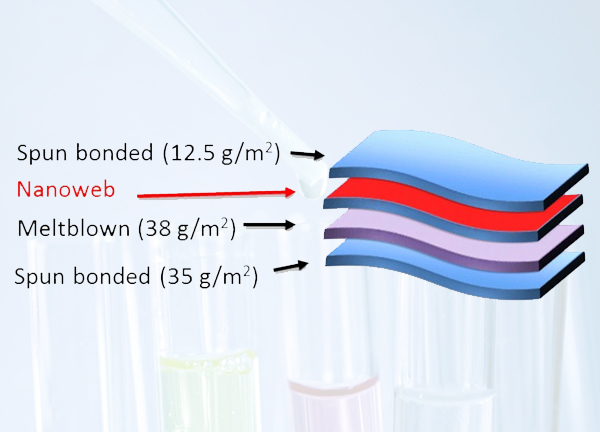
TM-351 Non-Wovens & Technical Textiles (3 0 3)

This course is designed for 5th semester textile engineering students. In this course the students will learn different types of non-woven technologies and study different types of technical textiles.

TM-352 Mechanics of Fibrous Structures (2 3 3)

The course has been designed for 6th semester textile engineering students. It deals with equations of elasticity, theory of anisotropic materials, elastic characterization of fibres, yarns and fabrics including woven, knitted and braided fabrics. These materials have been addressed from various aspects including structure, mechanical behavior and modeling

Fabric Manufacturing

FM-221 Introduction to Weaving & Knitting (3, 3)4

This course is designed to equip students with the basic understanding of fabric forming techniques and to introduce them with the machines used to produce these fabrics. This basic knowledge is to prepare them to move to the next level. It consists of study of main techniques used in industry to produce fabric & principles and mechanism of weaving & knitting. In addition to the study of essential machine mechanisms, basic fabric structures are also studied. Theory sessions are followed by practical exercises in the laboratory in order to clarify the student concepts.

FM-321 Weaving Preparatory Process (2, 3)3

Fabric Preparation is an integral part of weaving process. This course covers all important factors of Warp & Weft preparation. The study includes winding, warping, sizing process, sizing chemicals, size recipes, drawing-in & knotting in detail. As a result the students become fully conversant with all the technicalities of preparatory processes.

FM-322 Weaving Mechanism (3, 3)4

This is purely a weaving course. Weaving mechanisms of a loom are covered in detail. It covers tappet, dobby, & jacquard shedding and weft insertion systems of shuttle, projectile air jet, rapier & water jet looms. The beat up motions of shuttle & air jet are also covered in it. This study also includes secondary motions like let off, take up & warp stop motions of conventional & modern looms. Students acquire a sound knowledge of machine mechanism, which is pre-requisite for successful management of weaving plant.

FM-421 Advance Weaving & Knitting Techniques (3, 3)4

This is the final course on weaving technology therefore the course is designed from practical point of view which includes study of current technologies. As well as introduction to most innovative technologies of the woven industry. It will impart improving practical approach of students towards utilizing modern weaving systems to ward solving problems of actual case studies of different weaving situations. This course also contains study of knitted structures, machines, & advance knitting techniques.

FM-422 Fabric Structure & Design (3, 3)4

Fabric Design is a complex as well as important part of weaving. Hence, this course is designed to study the important elements of woven fabric structure and design in details. Fabric analysis is carried out for large number of woven samples of different types. Complex as well as simple woven designs are studied in detail. It is also designed to give an in-depth knowledge regarding designs produced by color & weave effect (Simple & Compound effects),

designs of multilayer fabrics & pile fabrics. The students also get familiar with the fabric faults, cloth geometry, color theory & properties of pile fabrics. The students will also learn the use of CAD system in designing of fabrics.

FM-423 Weaving & Knitting Calculations (4, 0)4

Mathematical calculations form an integral part of any technical discipline and weaving technology is no exception. This course is designed to cover all the important weaving & knitting calculations required by a graduate in his professional life. Mathematical calculations for yarn, winding, warping, sizing and fabric specifications are covered in detail. The knitting calculations like GSM, stitch length & production of warp & weft knitted fabric will also be covered in detail. The calculations regarding weavers work load & air conditioning will also be discussed in detail.

Textile Chemistry

TC-231 Textile Chemical Processing (3 3 4)

The objective of this course is to introduce the students to different areas of textile chemical processing, including

pre-treatment of textiles, textile dyeing, textile printing and textile finishing.

TC-331 Pre-treatment of Textiles (2 3 3)

In this course, the students will study in depth different preparatory processes to which textile materials are subjected

before dyeing, printing and finishing. These preparatory processes include, singeing, desizing, scouring, bleaching and mercerization. Both conventional and bio preparation methods are covered in the course. Students will learn in detail, the preparation of natural, manmade and blended textile materials in all forms. The emphasis will be on the rationale, principles, mechanisms, effect and control of various process parameters, most common problems, and their preventative and corrective measures. The course also includes lab practice.

TC-332 Textile Dyeing (3 3 4)

In this course the students will study in detail the principles and practice of dyeing natural, regenerated, and manmade fibres and their blends. The students will study classification, chemical structure, basic characteristics and basis of selection of different dyes, dyeing by batch, semi-continuous and continuous dyeing methods and overview of the machinery involved. The course also covers theory of dyeing, dyeing machinery and most common problems encountered in case of dyeing with different dyes by different dyeing methods, and their preventative and corrective measures. The course also includes lab practice.

TC-431 Colour Science (2 3 3)

In this course the students study fundamentals of color perception, description, notation, communication and

measurement. The course covers topics such as elements of color perception, standard illuminants, specification of color, Munsell system, CIELAB system, color difference, pass/fail system, shade sorting, strength analysis of dyes from solution, relative dye strength and tone analysis, assessment of whiteness and degree of yellowness, anatomy of color measuring instruments, and principles of computer color matching. The course also includes lab practice exercises in color matching.

TC-432 Textile Printing (3 3 4)

In this course students will study principles and practice of different methods and styles of printing including block printing, flat screen printing, rotary screen printing, direct style, resist style, discharge style, burn-out printing, flock printing, transfer printing and ink-jet printing. The course covers print design studio, screen making, print past preparation & rheology, printing process and fixation. The students learn printing of fabrics of natural, manmade and blended fibres with pigments and other dyestuffs, role of auxiliaries and the working principles of machinery used for printing and fixation. The course also includes lab practice.

TC-433 Textile Finishing (3 3 4)

In this course, the students will study the classification, rationale, principles, mechanisms, and methods of different

mechanical and chemical finishing processes. The students will cover finishes like chemical softening, hand-building finishes, drying and setting, easy-care finishes, water- and oil- repellent finishes, flame retardant finishes, soil release finishes, anti-static finishes, UV protection finishes, antimicrobial finishes, finishes for color fastness improvement, calendering, emerizing, raising, compressive shrinkage, bio-polishing and other novel finishes. The course also includes lab practice.


© 2008 National Textile University, Sheikhupura Road, Faisalabad, Pakistan, 37610.